
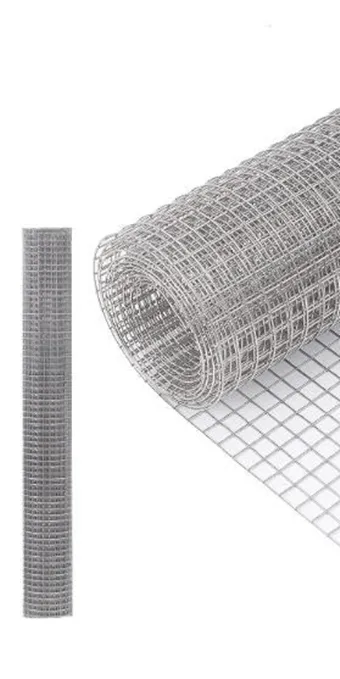
For the listed 0.17, 0.23 and 0.30 m thickness options, see the Reno mattress product page. Confirm the selected model, dimensions and mesh configuration against the approved order drawings.
Author: Hebei Zhongman Wire Mesh Products Co., Ltd.
1. What a gabion mattress specification must establish
A gabion mattress is a shallow, compartmented wire-mesh container filled with stone and connected to adjacent units. It can form a channel lining, bank revetment or scour-protection apron when its configuration suits the hydraulic and ground conditions. Buying a mattress by thickness alone leaves essential questions unanswered: what retains the stone, what protects the underlying soil, and how are the edges and adjoining units secured?
ASTM A975-24 addresses double-twisted mesh gabions and revet mattresses as products. It does not supply the site hydraulic calculation or approve a channel layout. A project specification should identify the product standard and edition separately from the design drawings and installation requirements. Welded mattresses require a specification appropriate to their different construction.
2. Match the mattress to the water and ground conditions
Start with the application: continuous channel lining, an outlet apron and bridge-scour protection do not have identical design conditions. The engineer should establish flow depth and velocity distribution, local turbulence, bed movement, expected scour, drawdown, debris and sediment abrasion. A reach-average velocity alone may conceal a critical condition at a bend, outlet or transition.
The foundation and filter also belong in the design. A mattress may remain visually intact while fine soil migrates beneath it. Specify the filter transition, bedding preparation, drainage and edge treatment with the lining, and check how they connect to the upstream and downstream works. FHWA HEC-23 provides public design context for gabion mattresses; its guidance must be applied to the relevant application rather than treated as a universal product rating.
3. Read the catalogue dimensions as a named configuration
The current Zhongman Reno mattress product page lists reference thicknesses of 0.17, 0.23 and 0.30 m. Its 80 × 100 mm mesh entry pairs 2.7 mm mesh wire with 3.4 mm selvedge wire, and the reference plan size is 6 × 2 m. These values describe the listed configuration; they are not minimum requirements for every mattress or a guarantee that every combination is available.
Keep mesh-wire diameter, selvedge diameter and connection-wire specification as separate order fields. If a polymer coating is requested, identify whether a stated diameter refers to the steel core or overall coated wire. The drawing should also show diaphragms, lids, end panels and the required connectors. Confirm any alternative thickness or plan size against its own drawing rather than silently substituting it for a catalogue model.
| Part of the order | Decision required | Evidence to agree |
|---|---|---|
| Mattress geometry | Length, width, thickness and compartment arrangement | Approved unit and layout drawings |
| Mesh and wire | Aperture, mesh wire, selvedge and connection components | Applicable product specification and inspection record |
| Coating | Metallic coating and any polymer layer, with exposure conditions | Agreed coating requirements and relevant test records |
| Stone and filter | Grading, durability, retention and filter compatibility | Project material schedule and acceptance method |
| Edges and transitions | Toe, upstream/downstream termination and adjoining works | Site-specific sections and construction details |
4. Specify stone and connections together
Stone selection must suit the actual aperture, mattress depth, placement method and exposure. Agree the grading and durability tests in the project specification; a convenient quarry description is not enough. Oversize pieces can obstruct a shallow compartment, while undersize material may escape or migrate. Stone placement must allow the lid to close without overstressing the mesh or leaving large unsupported voids.
Adjacent units and diaphragms need the connection system shown on the approved installation drawing. Lacing wire and mechanical fasteners are not interchangeable merely because both close a seam. Identify their material, coating, compatibility and installation method. Avoid adopting a universal fastener spacing or stone-drop height from an unrelated installation.
5. Installation hold points
- Survey and accept the prepared bed, filter and edge trenches before covering them. Record soft areas and any agreed treatment.
- Check the unit labels and dimensions against the delivery schedule. Inspect coatings, mesh continuity, diaphragms and supplied connectors.
- Assemble and connect empty units according to the approved sequence. Keep the compartments aligned and the filter protected from construction damage.
- Fill progressively using the agreed stone grading and placement method. Monitor distortion and preserve access to the seams that must be closed.
- Close and inspect lids, edges and transitions. Keep a photographic record of concealed work and schedule inspection after significant flow events.
6. Engineering FAQ
Q1: Does ASTM A975 establish an allowable flow velocity?
The product reference alone does not establish a site velocity limit. Hydraulic selection needs the proposed assembly, stone, filter, geometry and exposure, together with appropriate design evidence.
Q2: Can a different mattress thickness be substituted?
Only after the designer reviews its effect on stone containment, hydraulic resistance, flexibility, edge details and quantity. Confirm the revised unit drawing before ordering.
Q3: What should accompany a quotation request?
Send the approved lining layout and unit schedule, the water and ground conditions, the specified mesh and coating, the stone/filter responsibilities and the required inspection documents. This lets the supplier confirm the proposed supply configuration and identify missing information.
7. Procurement checklist
| Include with the enquiry | Information to confirm |
|---|---|
| Lining layout | Reach plan, sections, toe and edge details, unit quantities |
| Hydraulic basis | Flow/scour conditions, sediment abrasion and design evidence required |
| Unit configuration | Length × width × thickness, diaphragms, aperture and wire roles |
| Supply boundaries | Stone, filter, bedding and connectors: who supplies and installs each |
| Delivery acceptance | Batch labels, dimensional/coating checks and packing list |
Attach the lining drawings and unit schedule, and identify whether the stone and filter are included in your enquiry.
Send the drawings and procurement requirements
8. References and scope
- ASTM A975-24 — product specification for double-twisted gabions and mattresses. Product scope; not a hydraulic or retaining-wall design approval.
- FHWA HEC-23, Volume II, Design Guideline 10. Gabion-mattress countermeasure design context; apply the relevant site and application limits.
The linked Zhongman product pages describe the published supply range, not independent test evidence. State the required standard edition and acceptance documents in the order; compliance must be verified for the supplied product and batch.